
HarvestGroup360
© 2026 HarvestGroup360 — a brand operated by AMII LTD.
In modern algorithmic trading, latency is the ultimate hidden tax. Discover why a 1-millisecond delay in order routing leads to adverse selection and how institutional infrastructure solves it.
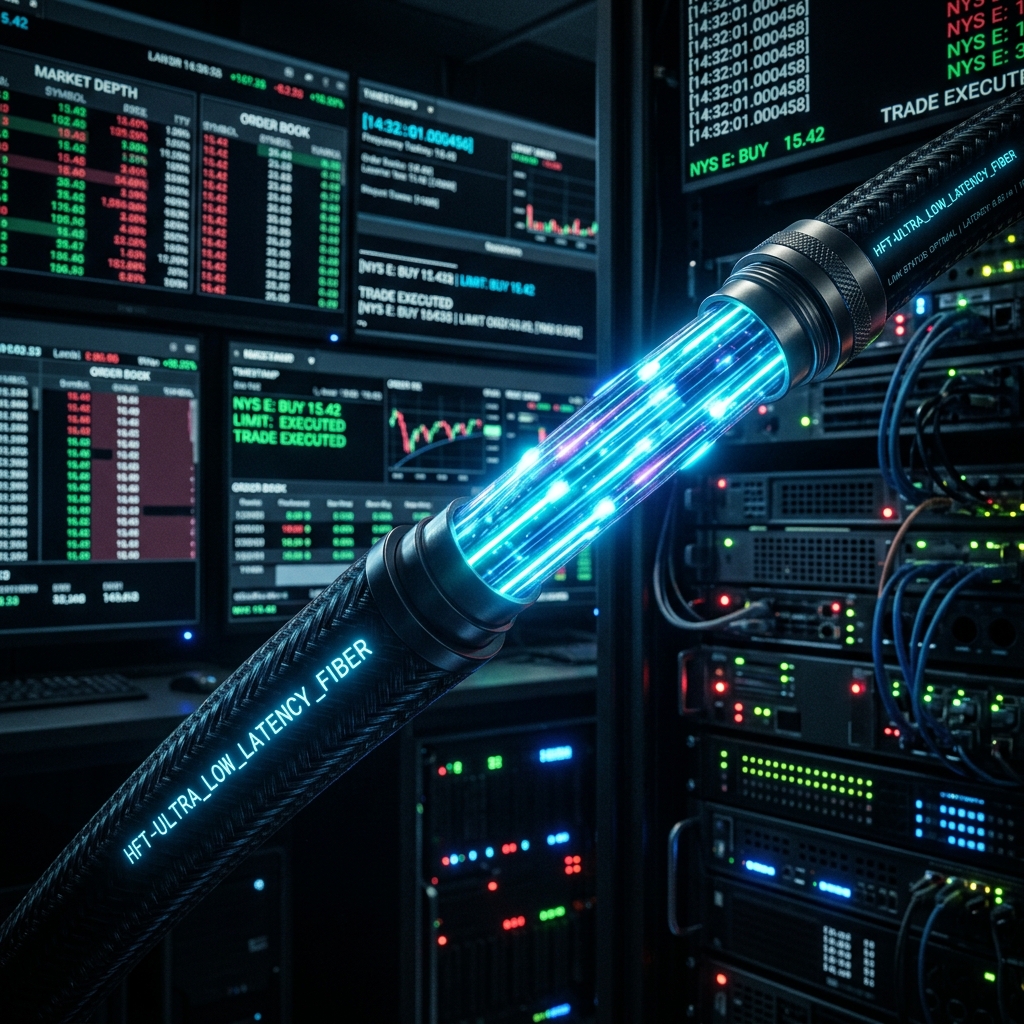
In the retail trading world, a platform that executes trades in "under a second" is heavily marketed as lightning fast. In the institutional quantitative space, measuring execution time in seconds—or even milliseconds—is the equivalent of bringing a knife to a gunfight. In modern algorithmic trading, latency is not just an inconvenience; it is a hidden tax that fundamentally destroys Alpha.
To understand the true cost of latency, you have to look at the physics of the Limit Order Book (LOB). The LOB is a highly competitive, zero-sum environment. When new information hits the market—whether it's a macroeconomic print, a news headline, or a massive institutional block order—the "true" price of an asset changes instantly.
If your trading system takes 1 millisecond (1,000 microseconds) to process that information and send an order, you are not trading against the "dumb money." You are trading against the top 0.1% of market makers who processed that same information in 10 microseconds.
This leads to a phenomenon known as adverse selection. If your algorithm spots a mispricing and fires off a limit order to buy, what happens during that 1-millisecond delay?
If the price is indeed moving in your favor (upwards), the faster High-Frequency Trading (HFT) firms will cancel their resting sell orders before your buy order arrives. You won't get filled. However, if your algorithm made a mistake and the price is crashing, the faster firms will gladly leave their sell orders resting, and your buy order will execute perfectly at the top of the crash.
How do you combat this? The answer is not a better machine learning model; it is better infrastructure. At HarvestGroup360, we bypass the standard internet stack entirely. We utilize Field-Programmable Gate Arrays (FPGAs), kernel-bypass networking (like Solarflare), and bare-metal servers co-located in the same data centers as the exchange matching engines. By pushing the execution logic down to the silicon level, we reduce tick-to-trade latency from milliseconds to nanoseconds.
A brilliant quantitative strategy executed slowly is worth exactly $0. Stop bleeding edge in the network stack and start building on institutional-grade infrastructure.
Build your algorithms on our sub-millisecond infrastructure. Explore our APIs and open-source tooling.