
HarvestGroup360
© 2026 HarvestGroup360 — a brand operated by AMII LTD.
How transitioning from traditional natural language processing to chaotic market data completely changes the paradigm of AI research.
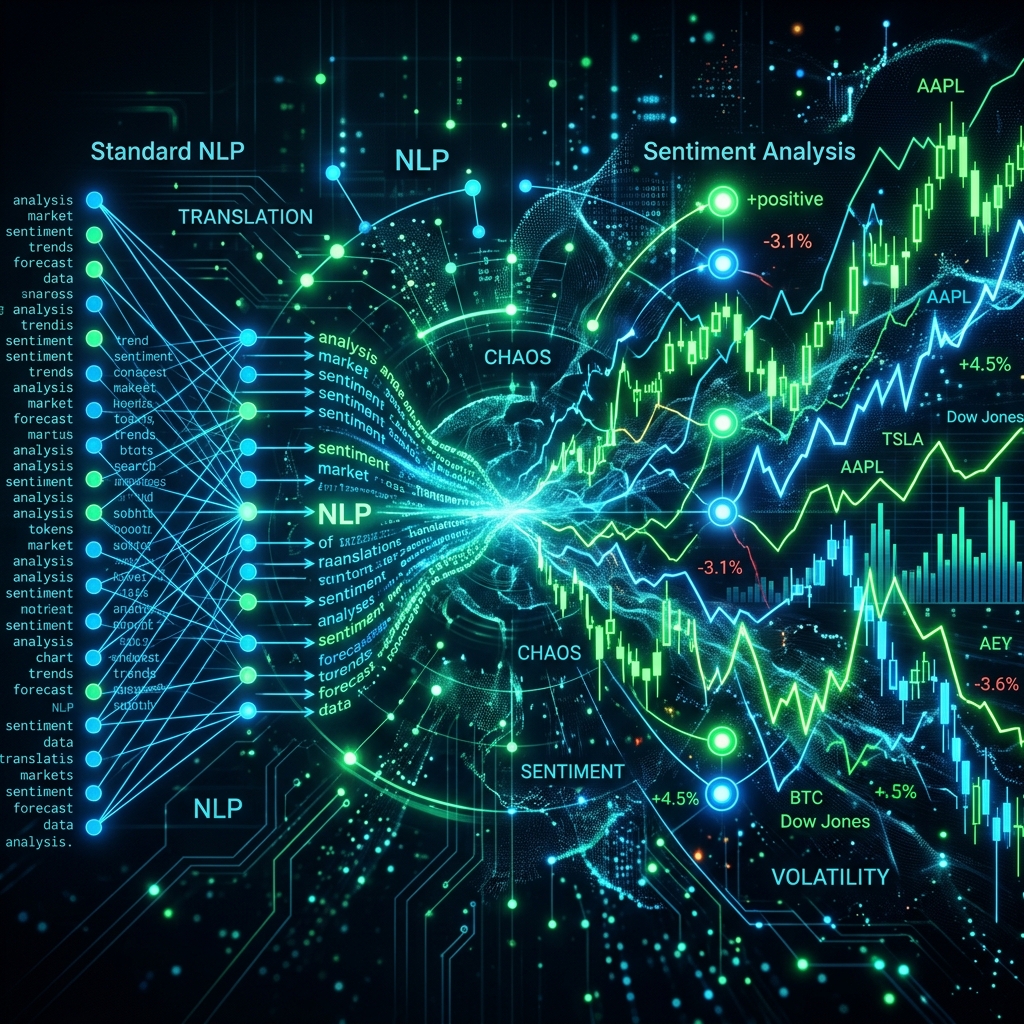
When I first joined HarvestGroup360, my background was deeply rooted in traditional Natural Language Processing (NLP). I was accustomed to pristine datasets, well-structured text, and predictable linguistic patterns. The transition into the world of quantitative finance, however, was a brutal awakening. The reality of market sentiment modeling is nothing like parsing encyclopedia articles or structured product reviews.
Financial data is inherently chaotic, adversarial, and exceptionally noisy. A single tweet, a delayed press release, or an obscure central bank comment can trigger massive volatility within milliseconds. The challenge is not just understanding the text, but understanding the market context and the intent behind the text in real-time.
Traditional large language models (LLMs) are incredibly powerful, but they are often too slow and computationally expensive for high-frequency trading applications. In the realm of quantitative finance, latency is just as important as accuracy. If your sentiment model takes 500 milliseconds to process a news headline, the trading opportunity is already gone.
To solve this, our team focuses on developing "Micro-Transformers"—highly optimized, domain-specific NLP models that have been stripped of unnecessary weights and distilled for maximum inference speed. These models are deployed directly on bare-metal GPU clusters, allowing us to parse and score financial text feeds in single-digit milliseconds without sacrificing predictive accuracy.
In standard NLP, the word "bull" might refer to an animal. In finance, it indicates upward market momentum. But the complexity goes far deeper. Sarcasm, double negatives, and industry-specific jargon create a minefield for generic sentiment models. For instance, the sentence "The company's earnings beat estimates, but forward guidance was surprisingly weak" contains conflicting signals that require deep contextual understanding to accurately score for trading algorithms.
At HarvestGroup360, we are continuously pushing the boundaries of what is possible with Alternative Data. By combining our ultra-low latency infrastructure with custom-built NLP micro-transformers, we are providing our clients with the tools they need to cut through the noise and extract genuine, tradable alpha from the chaos of global information flow.
Integrate our real-time sentiment streams directly into your algorithmic execution strategies.
Explore the Terminal